.webp)






Most role-playing games promise freedom but secretly protect the player. Fast travel is cheap. Death is reversible. Hunger is cosmetic. Combat can be brute-forced. Even when a world looks dangerous, it often bends quietly in your favor.
Outward refuses that contract.
Released in 2019 by Nine Dots Studio, Outward built its identity around discomfort. It is not a power fantasy. It is not a streamlined action RPG. It is a deliberate friction engine — a game where preparation matters more than reflexes, where survival mechanics aren’t side systems but structural pillars, and where failure reshapes your journey rather than resetting it.
This article examines the most divisive and defining feature of Outward: its uncompromising survival design — and how that design fundamentally alters pacing, combat, exploration, and player psychology.
1. The Philosophy of Vulnerability
Most RPGs position the player as exceptional. Outward does the opposite.
You begin the game not as a chosen hero, but as a debt-ridden villager in Cierzo. You are not special. You are not skilled. You are fragile.
No Chosen One Narrative
There’s no destiny framing your journey. The early hours revolve around paying off a blood price to avoid losing your home. The stakes are local and practical. This framing reinforces vulnerability: your survival matters because you are ordinary.
Consequences Without Game Over
Perhaps the boldest design choice is the absence of traditional game over screens. When you fall in combat, you don’t reload a save. Instead:
- You may wake up rescued by a stranger.
- You may be enslaved by bandits.
- You may be stripped of gear.
- You may awaken in a hostile dungeon.
Failure creates narrative detours. It costs time, supplies, and position — not progress.
This shifts the player mindset from “optimize victory” to “avoid disaster.”
2. Hunger, Thirst, and Temperature as Core Mechanics
In many RPGs, survival meters are optional flavor systems. In Outward, they are unavoidable strategic pressures.
Hunger and Thirst Are Performance Modifiers
Instead of killing you outright, hunger and thirst reduce stamina and health regeneration. This design choice matters:
- You can technically fight while starving.
- But your regeneration and sustain collapse.
- Prolonged neglect compounds risk.
This creates a layered risk economy rather than binary survival states.
Temperature as Environmental Combat
Each region has climate challenges:
- Chersonese: Cold and storms.
- Abrassar Desert: Extreme heat.
- Hallowed Marsh: Humidity and disease risk.
Without proper gear, food buffs, or campfires, the environment becomes a constant attrition source. Exploration without preparation is not adventurous — it’s suicidal.
3. Preparation Over Reflex
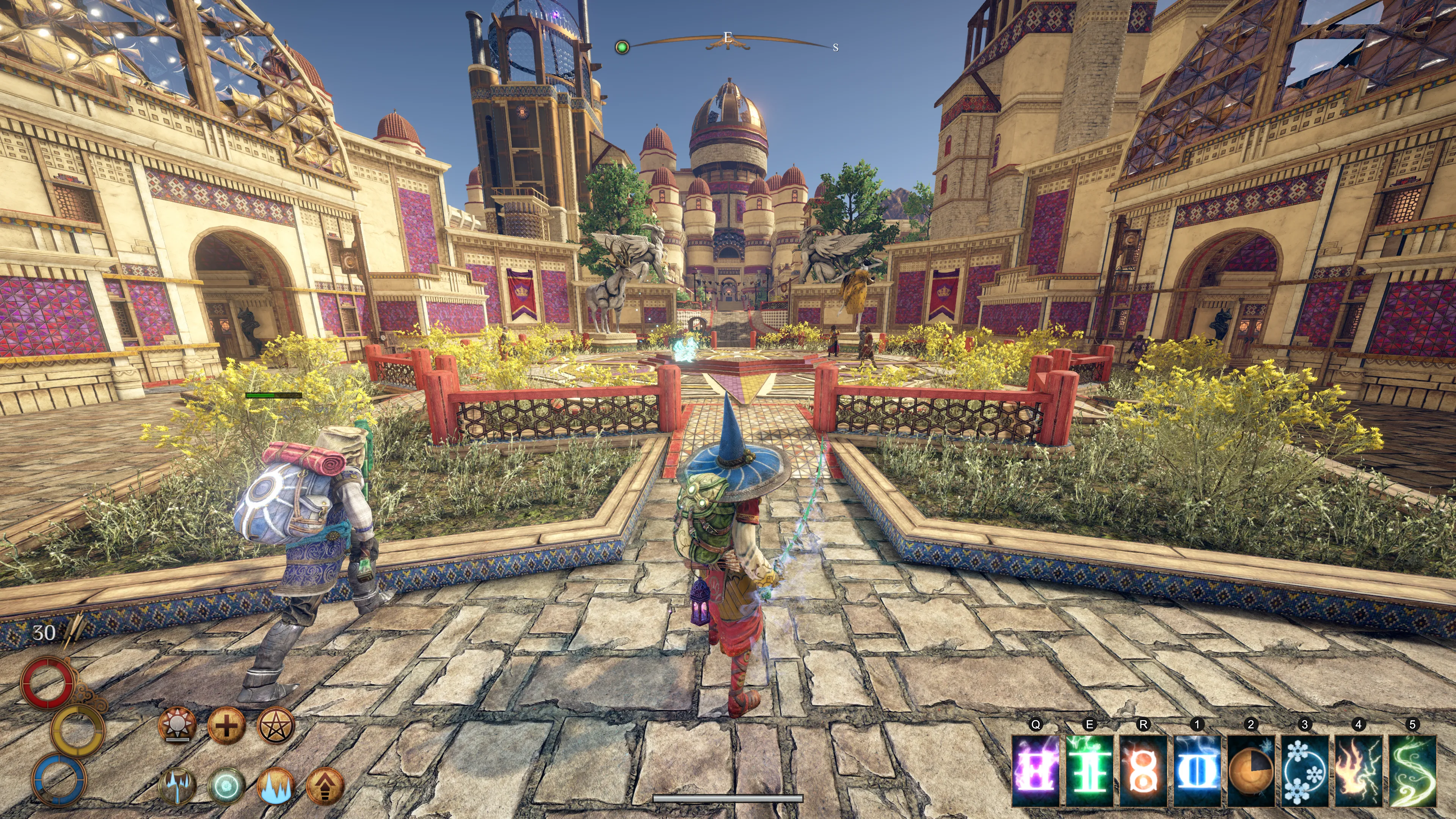
Combat in Outward is deliberately slow and punishing.
Stamina is Everything
Dodging, attacking, blocking — all consume stamina. Running consumes stamina. Carrying weight reduces stamina efficiency.
If stamina hits zero in combat:
- You cannot dodge.
- You cannot effectively retaliate.
- You are likely to be knocked down.
This means combat begins before the fight — in inventory management.
Buff Stacking as Strategic Depth
Before entering a dungeon, experienced players:
- Cook stamina food.
- Brew elemental resistance potions.
- Apply weapon rags (fire, frost, poison).
- Set traps at chokepoints.
- Rest to maximize regeneration.
Victory is earned through logistics, not button mashing.
4. The Backpack Problem
One of Outward’s most controversial systems is its backpack mechanic.
You cannot dodge effectively while wearing a full backpack.
This forces a choice:
- Keep backpack on and maintain mobility penalties.
- Drop backpack before combat and risk losing it mid-fight.
This simple system introduces meaningful tension:
- Did you remember where you dropped it?
- Can you retrieve it if enemies swarm?
- Will you forget it during retreat?
Inventory management becomes spatial and tactical — not just numerical.
5. No Fast Travel, Real Distance
Modern RPGs rely heavily on fast travel to compress time. Outward does not.
Travel is manual. Dangerous. Slow.
The Psychological Impact of Distance
Crossing Chersonese takes real time. You must:
- Watch for bandits.
- Avoid manticores.
- Monitor temperature.
- Track food and water.
Distance creates weight. A wrong turn costs hours. A death far from town can be catastrophic.
This creates rare emotional states in modern RPGs:
- Relief upon reaching safety.
- Genuine fear of overextension.
- Strategic route planning.
6. Magic as Sacrifice
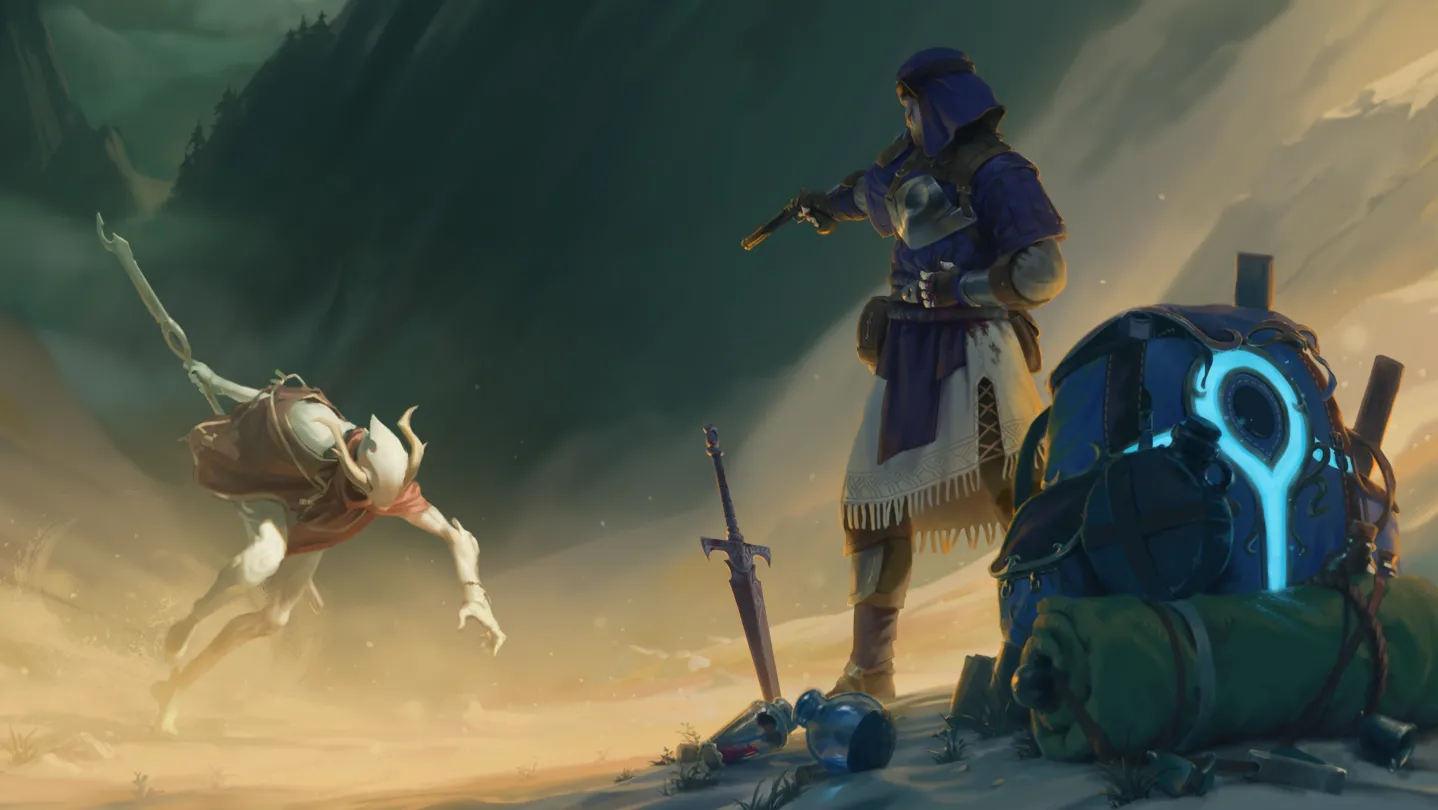
In Outward, magic is not freely granted.
To unlock mana, you must permanently sacrifice health and stamina at the Conflux Mountain ley line.
This is not symbolic. It is mechanical.
Mana is a Trade
Every point of mana:
- Reduces maximum health.
- Reduces maximum stamina.
You must commit to a build identity.
Hybrid characters exist — but they are fragile. Pure mages are powerful but physically vulnerable.
Magic circles require setup. Rune magic requires memorization patterns. Sigils require stones.
Spellcasting is preparation, not spam.
7. Skill Trees and Irreversible Builds
Unlike many RPGs, Outward does not allow easy respecs.
There are three breakthrough points in the game. Once spent, they are permanent.
You must choose carefully between:
- Warrior Monk
- Cabal Hermit
- Rune Sage
- Wild Hunter
- Philosopher
- Spellblade
- Mercenary
Each breakthrough defines your character permanently.
This design reinforces commitment and replayability — but punishes indecision.
8. Economy as Survival Loop
Money is not abundant in Outward. Silver has weight. Yes — literal weight.
Silver Has Physical Mass
Carrying too much currency increases encumbrance.
To avoid this, players convert silver into gold bars, which:
- Weigh less.
- Retain value.
- Require planning to reconvert.
This seemingly small detail reinforces realism and resource mindfulness.
Crafting Over Loot Grinding
Loot drops are not endlessly abundant. Many powerful items are crafted:
- Blue Sand Armor
- Horror weapons
- Scaled leather gear
- Endgame enchanted sets
This pushes players into hunting specific enemies and gathering rare materials.
9. Multiplayer Without Power Scaling
Outward supports co-op — but without traditional scaling or MMO design.
Two players share:
- Loot
- Resources
- Consequences
There is no separate loot table per player.
This creates tension:
- Who keeps rare gear?
- Who invests in mana?
- Who carries supplies?
Co-op in Outward feels like survival partnership — not power amplification.
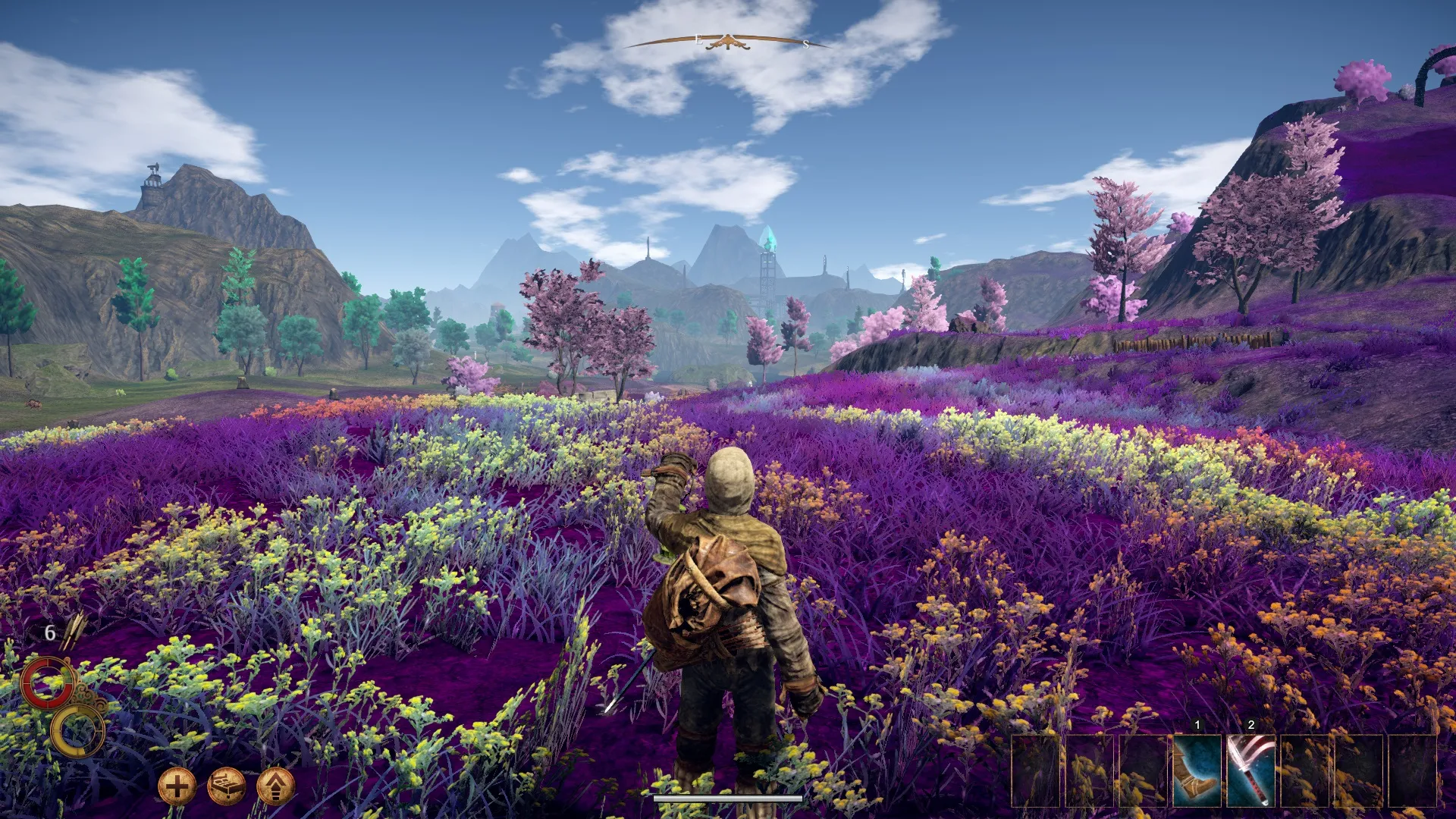
10. The Emotional Arc of Mastery
The most fascinating transformation in Outward happens not in the character — but in the player.
Early Game:
- You fear hyenas.
- You avoid bandits.
- You get lost easily.
- You starve.
Mid Game:
- You understand weather cycles.
- You pre-buff before combat.
- You set ambushes.
- You plan expeditions.
Late Game:
- You chain elemental synergies.
- You exploit enemy weaknesses.
- You cross regions confidently.
- You build optimized enchantments.
The game never becomes easy — but you become competent.
This progression feels earned in a way few RPGs achieve.
Why Outward’s Survival Design Still Matters
In an era where accessibility and convenience dominate design philosophy, Outward stands apart.
It demands:
- Patience.
- Attention.
- Commitment.
- Acceptance of failure.
Its survival systems are not superficial realism layers. They are structural architecture shaping every mechanic:
- Combat pacing
- Exploration rhythm
- Economic management
- Character builds
- Emotional engagement
The friction is intentional.
And for the right player, it is transformative.
Conclusion
Outward is not a comfortable RPG. It is not smooth. It is not forgiving. It does not respect your time in conventional ways.
But what it offers in exchange is rare:
- Genuine vulnerability.
- Meaningful preparation.
- Real consequences.
- Organic mastery.
Its survival systems are not side features — they are the heart of its identity. They slow the genre down. They reintroduce risk. They restore weight to decision-making.
In a market filled with streamlined RPGs that protect players from discomfort, Outward remains defiantly uncompromising.
And that is exactly why it still matters.