Dark Pals: The 1st Floor – The Psychological Design of Confinement, Hallway Horror, and Environmental Oppression

In Dark Pals: The 1st Floor, horror is not built primarily through monsters or sudden violence. Instead, the game creates fear through confinement, environmental repetition, and the gradual corruption of familiar interior spaces. The apartment floor itself becomes a psychological machine—one that traps players in a looping structure of uncertainty, isolation, and oppressive spatial design.
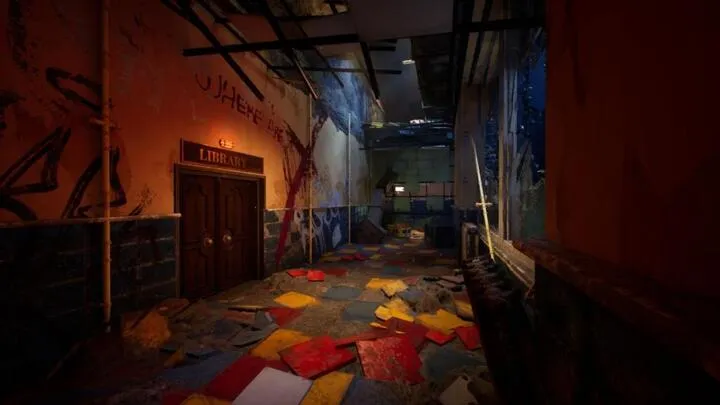
Unlike many horror titles that rely on large open areas or constant pursuit mechanics, Dark Pals: The 1st Floor focuses intensely on a single location. This limited setting allows the game to manipulate player perception with extraordinary precision. Hallways change subtly, rooms lose consistency, sound design amplifies emotional discomfort, and ordinary domestic spaces become increasingly hostile.
This article explores a specific topic within the game: the psychological architecture of confinement and environmental oppression. Rather than discussing gameplay systems or walkthroughs, we analyze how the game transforms a simple apartment floor into a deeply unsettling emotional landscape. Across ten thematic stages, we examine how space, repetition, silence, and distortion work together to create one of the game’s strongest narrative and atmospheric achievements.
The Apartment Floor as a Controlled Psychological Space
Why a Single Floor Matters
Most horror games expand outward as the player progresses. Dark Pals: The 1st Floor does the opposite—it traps players within a tightly limited environment.
This restriction creates several psychological effects:
- Familiarity becomes unavoidable
- Repetition intensifies observation
- Escape feels impossible
The first floor becomes less like a location and more like a mental prison.
The Fear of Inescapable Routine
Apartment buildings symbolize routine urban life:
- Returning home
- Walking identical hallways
- Passing anonymous doors
The game weaponizes this familiarity by turning everyday repetition into emotional discomfort.
Hallway Design and the Fear of Linear Space
Corridors as Instruments of Tension
Hallways dominate the game’s structure. Long corridors force players into predictable movement patterns with limited freedom.
This creates vulnerability because:
- Visibility is restricted
- Direction is controlled
- Players anticipate danger continuously
Why Straight Lines Feel Oppressive
Linear spaces remove strategic choice. Unlike open environments, hallways trap players psychologically between:
- What is behind them
- What may appear ahead
The result is constant anticipation without release.
Repetition and Environmental Memory
Returning to Familiar Spaces
The game repeatedly sends players through the same locations. Initially, this creates comfort through familiarity.
However, repetition gradually transforms into fear.
Memory as a Horror Mechanic
Players begin memorizing:
- Door placement
- Lighting conditions
- Sound patterns
Once these details are established, even tiny changes become disturbing.
Examples include:
- A missing object
- Altered wallpaper
- Slightly different lighting
The environment attacks the player’s memory directly.
Domestic Spaces Becoming Unnatural
Apartments as Symbols of Safety
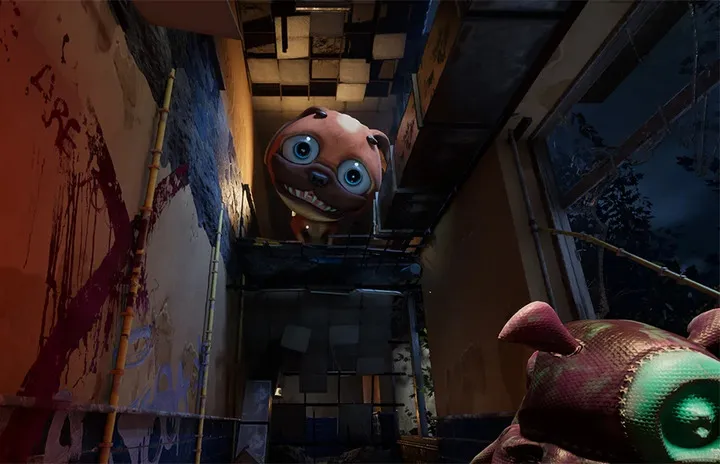
Homes traditionally represent security and privacy. Dark Pals intentionally corrupts this expectation.
Rooms become emotionally hostile through:
- Unnatural silence
- Spatial distortion
- Abandoned personal objects
The Corruption of Everyday Objects
Ordinary items become psychologically threatening:
- Televisions emitting static
- Chairs facing impossible angles
- Family photos appearing altered
The horror comes not from the object itself, but from the realization that something familiar is wrong.
Silence, Sound, and Acoustic Isolation
The Importance of Controlled Silence
The game frequently removes background music entirely. This absence creates emotional vulnerability.
Silence forces players to focus on:
- Footsteps
- Distant creaking
- Environmental hums
Sound as Spatial Manipulation
Audio often behaves unnaturally:
- Sounds emerge from unclear directions
- Echoes persist too long
- Noises stop abruptly upon investigation
This destabilizes spatial awareness.
The player no longer trusts the environment acoustically.
Lighting and Visual Compression
Dim Interiors and Restricted Vision
Lighting in Dark Pals rarely provides full visibility. Instead, illumination is partial and uneven.
This creates:
- Unclear room boundaries
- Hidden corners
- Constant visual uncertainty
The Psychology of Visual Compression
Narrow visibility compresses perception. Players focus intensely on immediate surroundings while fearing unseen space.
Darkness becomes more threatening because it exists inside familiar architecture.
The apartment itself begins concealing reality.
Spatial Distortion and Impossible Architecture
The Breakdown of Physical Logic
As the game progresses, the building stops obeying architectural consistency.
Examples include:
- Rooms connecting impossibly
- Hallways extending unnaturally
- Doors leading to altered spaces
Why Impossible Space Creates Fear
Humans rely on stable geometry for emotional safety. Once architecture becomes unreliable, players lose orientation psychologically.
This transforms the building into a living system rather than static structure.
The apartment feels aware.
The Presence of Invisible Observation
Feeling Watched Without Seeing Anyone
One of the game’s strongest techniques is creating surveillance anxiety without constant enemy visibility.
Players often feel observed because of:
- Slight environmental movement
- Delayed audio responses
- Sudden silence after noise
Psychological Surveillance
The fear intensifies because the observer is rarely confirmed.
Questions emerge:
- Is something following the player?
- Is the building itself reacting?
- Are the apartments occupied?
Ambiguity becomes more powerful than direct confrontation.
Isolation and Urban Loneliness

Apartment Living as Emotional Separation
Despite existing in a residential building, the player feels profoundly isolated.
Doors remain closed.
Neighbors remain unseen.
Communication feels absent.
The Horror of Anonymous Urban Life
The game reflects a modern urban anxiety:
- Living close to others while remaining emotionally disconnected
The apartment floor becomes socially empty despite evidence of human presence.
This emptiness amplifies psychological tension.
The Final Transformation of the Floor
From Building to Psychological Entity
By the later stages, the apartment floor no longer feels like physical architecture.
Instead, it becomes:
- A memory space
- A psychological projection
- A hostile emotional system
The Collapse of Reality Within Confinement
At the climax:
- Space loses consistency entirely
- Time feels unstable
- Environmental repetition becomes surreal
The floor evolves into a manifestation of confinement itself.
The player is no longer exploring a building—they are trapped inside an emotional state.
Conclusion
Dark Pals: The 1st Floor demonstrates how horror can emerge not from scale or spectacle, but from controlled environmental oppression. Through hallways, repetition, silence, and architectural instability, the game transforms an ordinary apartment floor into a deeply psychological experience.

Its greatest strength lies in how it weaponizes familiarity. Every corridor, apartment, and domestic object initially feels ordinary before gradually becoming distorted. The horror grows through subtle changes rather than dramatic shocks, creating sustained emotional tension rooted in uncertainty and confinement.
Ultimately, the apartment floor functions as more than a setting—it becomes the central antagonist of the experience. By manipulating memory, perception, and spatial trust, Dark Pals creates a uniquely oppressive form of psychological horror where the environment itself feels alive, hostile, and impossible to escape.