
The Sky Has a Post Office, and One Missing Uncle: A Travel Diary from Into the Wind
Monday, 8:15 AM — Santa Rosa
Dear Diary,
I inherited a delivery business.
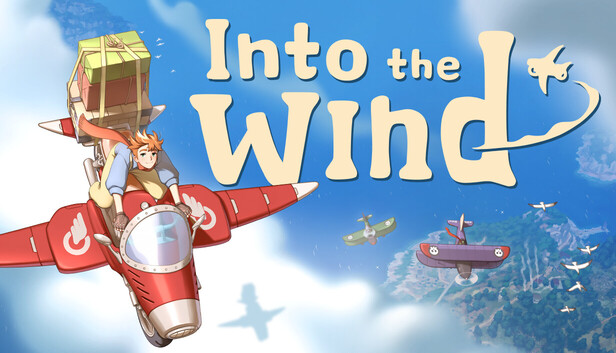
Not exactly the career I imagined for myself. I was expecting something exciting, perhaps a mysterious inheritance or an ancient treasure map. Instead, I received a business full of unfinished deliveries, a collection of unfamiliar island routes, and a motorcycle that apparently believes it can fly.
His name is Ermes.
He is not an ordinary motorcycle. He is also an aircraft, my transportation, my delivery partner, and possibly the strangest coworker I have ever had.
My uncle Umberto disappeared while investigating a mysterious cloud above Santa Rosa. Before I can understand what happened to him, I need to keep his business running.
There are packages waiting, people expecting deliveries, and an entire archipelago that seems determined to distract me with beautiful scenery.
Welcome to Into the Wind, a cozy adventure about flying, delivering, making friends, and discovering that sometimes the most interesting mysteries are found between two ordinary destinations.
1. The Inheritance Nobody Prepared Me For
I always thought inheriting a business would mean paperwork, financial problems, and awkward conversations with people who knew the previous owner.
I was not expecting a flying motorcycle.
In Into the Wind, players take over their missing uncle Umberto's delivery business and begin a new life across the fictional Adriatic archipelago of Santa Rosa. The central companion is Ermes, a sentient motorcycle-plane that allows players to travel along roads and take to the skies. <Cite refs={["turn604988view0","turn604988view1"]}/>
It is an unusual premise, but that is exactly what makes it appealing.
Instead of beginning as a legendary hero or a professional adventurer, you start with a relatively ordinary responsibility: keep the business running.
People need packages delivered. The islands need a reliable courier. And somewhere beyond the familiar routes lies the mystery of your uncle's disappearance.
This gives the adventure a personal starting point.
You are not exploring Santa Rosa simply because a quest marker tells you to travel somewhere. You are gradually becoming part of the place, meeting its residents, learning its routes, and rebuilding something that belonged to someone you care about.
The delivery business may not sound particularly heroic.
But every great adventure needs a reason to leave home.
2. Ermes: The Only Coworker Who Can Turn into an Airplane
Every courier needs a reliable vehicle.
Some use delivery vans. Others use motorcycles or bicycles. My new business partner has decided that ordinary transportation is not ambitious enough.
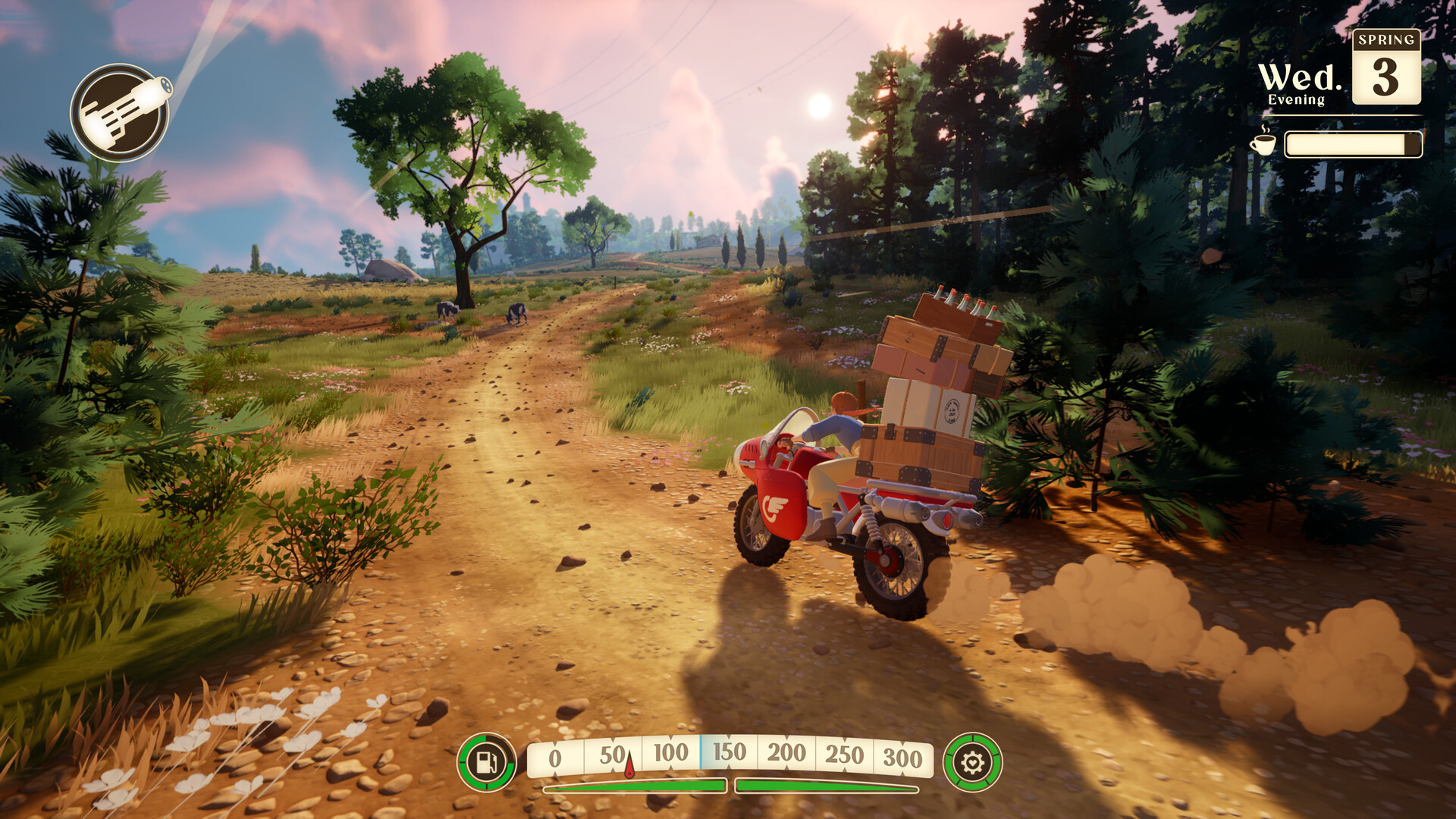
Ermes combines motorcycle driving with flight, allowing players to explore Santa Rosa both on the ground and in the air.
The developers describe its handling as a combination of physical vehicle behavior and arcade-style accessibility. Momentum, cargo weight, fuel, weather, wind, and landing conditions all influence the journey. <Cite refs={["turn604988view1","turn604988view3"]}/>
That means flying is not simply pressing a button and moving in a straight line.
The weight of your cargo matters. Your available fuel matters. The route you choose can make a difference, and a landing that looks easy from above might become a rather unfortunate experience when you reach the ground.
There is something charming about this relationship between player and vehicle.
Ermes is not just a transportation menu disguised as a motorcycle. He is the central companion through which much of the adventure happens.
You travel together, upgrade together, and gradually become capable of taking on more challenging deliveries.
I imagine most courier companies would consider a sentient aircraft an unusual employee benefit.
Santa Rosa, apparently, has different recruitment standards.
3. Santa Rosa: Somewhere Between a Postcard and a Dream
Tuesday, 4:30 PM — Coastal Route
Today I spent more time looking at the scenery than looking at the delivery instructions.
I regret nothing.
Santa Rosa is designed as a nostalgic interpretation of an Adriatic archipelago, inspired by the atmosphere of small Italian villages, coastal roads, cafés overlooking the water, and picturesque island communities. <Cite refs={["turn604988view1","turn604988view0"]}/>
Its visual identity is one of the most distinctive parts of Into the Wind.
Rather than presenting an enormous world filled exclusively with dangerous enemies and difficult objectives, the game emphasizes the pleasure of travelling through a beautiful environment.
A road winding along the coast becomes an invitation to explore. A small village becomes a place to meet its residents. A café overlooking the water becomes somewhere worth stopping, even when there is a delivery waiting.
The world also draws inspiration from the artistic atmosphere associated with Studio Ghibli and the romantic aviation setting of Porco Rosso, something the developers have openly discussed. <Cite refs={["turn604988view0","turn482202search8"]}/>
That influence helps explain the game's personality.
Santa Rosa is not just a map that connects missions. It is a place designed to make players want to spend time inside it.
Sometimes, the best part of a journey is not reaching the destination.
It is discovering that the road there was worth taking.
4. A Delivery Is Never Just a Delivery
Wednesday, 10:20 AM — Package Number 17
Today's assignment looked easy.
Pick up a package, travel to another village, and deliver it.
What could possibly go wrong?
Apparently, quite a lot.
Deliveries are at the center of the game's progression system. Players take jobs from the island's residents, transport packages across the archipelago, and earn resources that can be invested in improving Ermes.
However, not all deliveries are identical.
Some packages are delicate and must be handled carefully. Others are heavy enough to affect the vehicle's performance, particularly when travelling uphill or downhill. <Cite refs={["turn604988view0","turn604988view3"]}/>
This makes each contract feel like a small transportation challenge.
A fragile parcel creates a different kind of responsibility from a heavy shipment. A difficult route can turn an otherwise ordinary assignment into a test of vehicle control.
The journey becomes part of the job.
And because successful deliveries provide resources for future upgrades, there is a natural reason to keep accepting new contracts.
It is a surprisingly satisfying cycle: take a job, plan the route, complete the delivery, improve the vehicle, and discover what the upgraded machine can do.
The developers have described this as a deliberately rewarding rhythm of making a delivery, collecting an upgrade, and immediately wanting to head back out again. <Cite refs={["turn604988view0"]}/>
It is not the kind of adventure where every mission needs a dramatic villain.
Sometimes, the satisfaction comes from delivering the right package to the right person without dropping it into the sea.
5. The Art of Getting Lost on Purpose
There are two kinds of travellers.
The first group follows the shortest possible route and arrives exactly when expected.
The second group sees an interesting road, decides to investigate, and arrives somewhere completely different.
I am beginning to suspect that Santa Rosa was designed for the second group.
The game encourages exploration through its open-world island environment, allowing players to discover villages, scenic roads, shortcuts, and places worth visiting between assignments.
But exploration is not completely separated from the delivery mechanics.
A route that appears convenient may become difficult because of terrain, weather, wind, or cargo weight. Roads and shortcuts can offer different possibilities, while taking to the air introduces its own considerations. <Cite refs={["turn604988view1","turn604988view3"]}/>
This creates an interesting relationship between freedom and responsibility.
You are free to explore, but your decisions still matter.
The quickest-looking route might not be the easiest one. A beautiful shortcut might lead to an awkward landing. A longer road could be more practical when transporting something particularly heavy.
The world therefore rewards curiosity without making every journey feel identical.
You can focus on the delivery or take a little time to appreciate the environment around you.
And sometimes, the most memorable discovery happens when you stop following the planned route altogether.
6. Air Pirates: The Reason Nobody Should Leave Their Packages Unattended
Thursday, 2:45 PM — Unscheduled Encounter
I thought the biggest problem in the delivery business would be bad roads.
I was wrong.
Santa Rosa has air pirates.
A peaceful island adventure suddenly becomes less peaceful when flying troublemakers appear in the sky. They add a combat element to the experience, creating encounters that can interrupt an otherwise ordinary delivery.
But the interesting part is that combat is not necessarily forced on every player.
In a developer Q&A shared through the official Steam community, the studio explained that pirates do not automatically attack in every situation. They become aggressive when players carry cargo they want to steal or when players shoot at them. Players can also flee or take alternative routes to avoid confrontations. <Cite refs={["turn482202search3"]}/>
This is an important design choice.
It allows the game to maintain its cozy adventure identity without removing the possibility of danger.
Players who enjoy action can engage with hostile aircraft. Those who prefer peaceful exploration can often avoid combat and concentrate on deliveries and island life.
The pirates therefore become part of the world rather than an unavoidable obstacle that constantly interrupts every journey.
Still, I would recommend keeping an eye on the cargo.
Some people apparently have very different ideas about what constitutes an honest delivery business.
7. Building a Home in a World That Always Invites You Outside
Friday, 6:00 PM — Back at Base
After spending most of the day travelling, I finally returned home.
It turns out that being a courier is not only about flying from one destination to another. There is also a place worth returning to.
Into the Wind allows players to customize their character and Ermes, as well as decorate and furnish their home and crew base. Decorations are not simply free objects placed from a menu; they need to be delivered back to the base. <Cite refs={["turn604988view1"]}/>
This gives home customization a connection to the central delivery system.
The objects you collect and bring home become part of the environment you are building. Their placement can also provide bonuses that help with progression.
It is a small but meaningful detail.
The home becomes a reflection of the journeys you have completed. Each decoration represents something earned, transported, and brought back from the world outside.
The base also creates a contrast with the open sky.
Outside, the player is constantly moving between destinations. At home, there is an opportunity to slow down, organize the space, and make the environment feel more personal.
The result is a progression loop that goes beyond vehicle upgrades.
You are not only improving the way you travel.
You are gradually building a life in Santa Rosa.
8. The People Who Make a Small Island Feel Like Home
An open-world adventure can have beautiful scenery and interesting transportation, but it also needs people who make the world feel alive.
Santa Rosa is populated by colorful residents, and getting to know them forms part of the story progression.
Making deliveries creates opportunities to meet the islanders, learn more about their lives, and build relationships with the crew and other residents. <Cite refs={["turn604988view0","turn604988view1"]}/>
This gives the delivery system another purpose.
A package is not just an object moving from one location to another. It represents a small interaction with someone living in the world.
Every job can introduce another person, another request, or another piece of information about the archipelago.
Over time, these interactions create the feeling that you are becoming part of a community rather than simply passing through a collection of missions.
The crew is also important to the player's life at the base, with customization and furnishing systems helping establish a shared home.
The game is built around the idea of creating a new life far away from the mainland.
And that life would not feel particularly meaningful if there were nobody around to share it with.
Sometimes, the smallest conversations can make a fictional place feel surprisingly real.
9. Uncle Umberto's Last Flight: The Mystery Above the Clouds
Saturday, 9:10 PM — A Question Without an Answer
There is one reason I have not abandoned the delivery business.
My uncle Umberto disappeared.
He was investigating a mysterious cloud above Santa Rosa when he vanished, leaving behind a business and a collection of unanswered questions.
The player's journey gradually connects deliveries, relationships with the island's residents, and exploration with the attempt to uncover what happened to him. <Cite refs={["turn604988view1","turn604988view0"]}/>
This mystery gives the adventure a larger narrative purpose.
Without it, the delivery business could simply be a sequence of charming jobs across beautiful islands. With it, every new discovery has another possible meaning.
What was Umberto searching for? Why did he try to reach beyond the clouds? Did he discover something unusual in the skies above Santa Rosa?
These questions create a narrative thread that connects the smaller moments of daily life.
The interesting contrast is that the player does not necessarily spend every moment investigating.
You still have deliveries to complete, residents to meet, a vehicle to improve, and a home to decorate.
Life continues while the mystery remains unresolved.
That makes the story feel less like a traditional adventure in which every moment is dedicated to chasing the main villain.
Instead, the mystery exists alongside ordinary life, slowly becoming part of the reason you want to explore further.
Sometimes, the best way to find answers is simply to keep moving.
10. The Joy of One More Delivery
Sunday, 7:00 PM — End of the Week
I have completed several deliveries, explored unfamiliar routes, improved Ermes, and spent far too much time looking at the sea.
I still have no idea exactly what happened to Umberto.
But I have started to understand why this place is so difficult to leave.
The progression in Into the Wind connects several activities into one continuous experience.
Deliveries provide resources. Resources allow players to upgrade Ermes. Better vehicle capabilities make more challenging jobs and new adventures possible. Customization gives the player another reason to collect and transport items, while relationships and exploration gradually reveal more about Santa Rosa.
The systems reinforce one another without making the entire adventure feel like a race to the next objective. <Cite refs={["turn604988view1","turn604988view3"]}/>
That is what gives the game its particular appeal.
There is always something else to do, but not every activity feels urgent.
You can accept another delivery, explore a different route, meet someone new, improve the motorcycle-plane, or spend time making your home feel more complete.
The adventure has room for both progress and quiet moments.
And that might be the most important thing about it.
The goal is not simply to reach the end of a journey as quickly as possible.
It is to enjoy everything that happens along the way.

Conclusion: Some Adventures Are Better Measured in Miles, Not Milestones
Into the Wind presents an appealing alternative to traditional action-heavy adventures.
Instead of focusing exclusively on defeating enemies or conquering an enormous world, it places players in the role of a courier building a new life across the beautiful islands of Santa Rosa.
Its sentient motorcycle-plane, Ermes, creates a distinctive way to explore the environment. Deliveries introduce meaningful progression through cargo weight, fuel, weather, and route planning. Vehicle and home customization give the player a sense of ownership, while air pirates add optional danger to the otherwise peaceful journey.
Behind these activities is a more personal story: the disappearance of Uncle Umberto and the mysterious cloud he was investigating.
The combination makes the game feel like a travel diary where every package has a destination, every island has something worth discovering, and every successful journey creates another reason to take off.
Perhaps the most memorable part of the adventure will not be the final mystery or the most difficult aerial encounter.
It might simply be an evening flight over the Adriatic Sea, with Ermes humming beneath you and the coastline glowing in the sunset.
Because sometimes, the best part of an adventure is not where you are going.
It is having a beautiful reason to keep travelling.